What to Grow in a Bay Area Edible Garden

Updated: Jul 25
It's easy to forget, living in an urban center like the San Francisco Bay Area, that California is a major agricultural producer. Nearly half of the country's vegetables and over three-quarters of its fruits and nuts are grown here. Our mild climate and long growing season make it possible. Northern California has many small farms that supply farmers markets throughout San Francisco and the surrounding counties.

With this abundance of quality, locally grown produce available year round, why bother to grow your own food in San Francisco?
Growing food teaches a skill everyone deserves to have
As our world becomes more uncertain, food sovereignty may become more necessary. Growing fruits and vegetables is also a chance to learn about biology, and it's a great way to teach applied science to kids.
When we put in the effort to grow our own food, we understand where it comes from. We feel more gratitude for the hands that help get food to our tables. It's a beautiful way to connect to place and see the interconnectedness of our world. This is why I do this work in my own backyard and in my community.
The Practical Case to Grow Your Own Food in San Francisco
Growing your own food lets you select rare heirloom varieties you won't find at the market. It also lets you extend the harvest for specialty items with a short season. Some staple crops are easy to find, but cheaper to grow in bulk at home. If you're not sure which crops are worth the trouble versus buying at the market, that's exactly the kind of question garden consulting can help sort out.
A productive vegetable garden supports interesting preserving projects. The excess makes great gifts for friends and neighbors, and sharing food is one of the simplest ways to build community resilience.
The most useful gardens start with a simple question: what does your family actually eat most? Think about what would be convenient to have growing right outside your door. When space is limited, an easy vegetable side or a salad you can put together with whatever's on hand tends to matter more, day to day, than a rare crop you'll only use once or twice a year.
What to Grow in a Bay Area Edible Garden Depends on Your Microclimate
San Francisco's own growing conditions add another layer. The city's fog belt neighborhoods run cooler and shadier, while sunnier pockets inland and further south get more heat. What grows well in the Sunset won't always thrive the same way in Bernal Heights or Noe Valley. Knowing your own yard's sun and wind patterns matters as much as knowing what to plant, which is exactly why deciding what to grow in a Bay Area edible garden starts with your own conditions, not a generic list. This is the site-specific thinking behind good edible garden design, rather than picking plants off a list and hoping they take.
My favorite crops for small space San Francisco gardens
Green garlic
Green garlic has a very brief season at farmers markets, which makes it a great specialty crop to grow at home. Garlic is easy to grow. If you plan to harvest the green shoots before the bulbs form, you can plant it closely, which works well in small space gardens.
Plant cloves in fall for a late winter to early spring harvest. Garlic wants full sun and well-drained soil, and it does fine in a deep container if you're short on bed space.
Peas and beans
Members of the Fabaceae family fix nitrogen in the soil through their roots, so they need less input than most crops. If you let them fruit, the plant uses that fixed nitrogen to produce seed. The discarded greens are a great addition to home composting.

Shelling peas at farmers markets tend to run expensive, and sauteed pea shoots are surprisingly pricey at restaurants. Both are easy to grow yourself. Trailing varieties can go up a trellis, so you save space by growing vertically. Leave a few pods on the plant to dry out and you'll have free seed for next year.
Peas do best planted in late winter through early spring for a spring harvest, and again in early fall for a second round. Beans prefer the warmer months, once the soil has warmed up in late spring. Both like at least six hours of sun and a trellis or fence to climb.
Root crops
Daikon has a large, deep taproot that helps break up compacted soil.
Radishes germinate quickly, so they're a satisfying crop for beginners and kids.
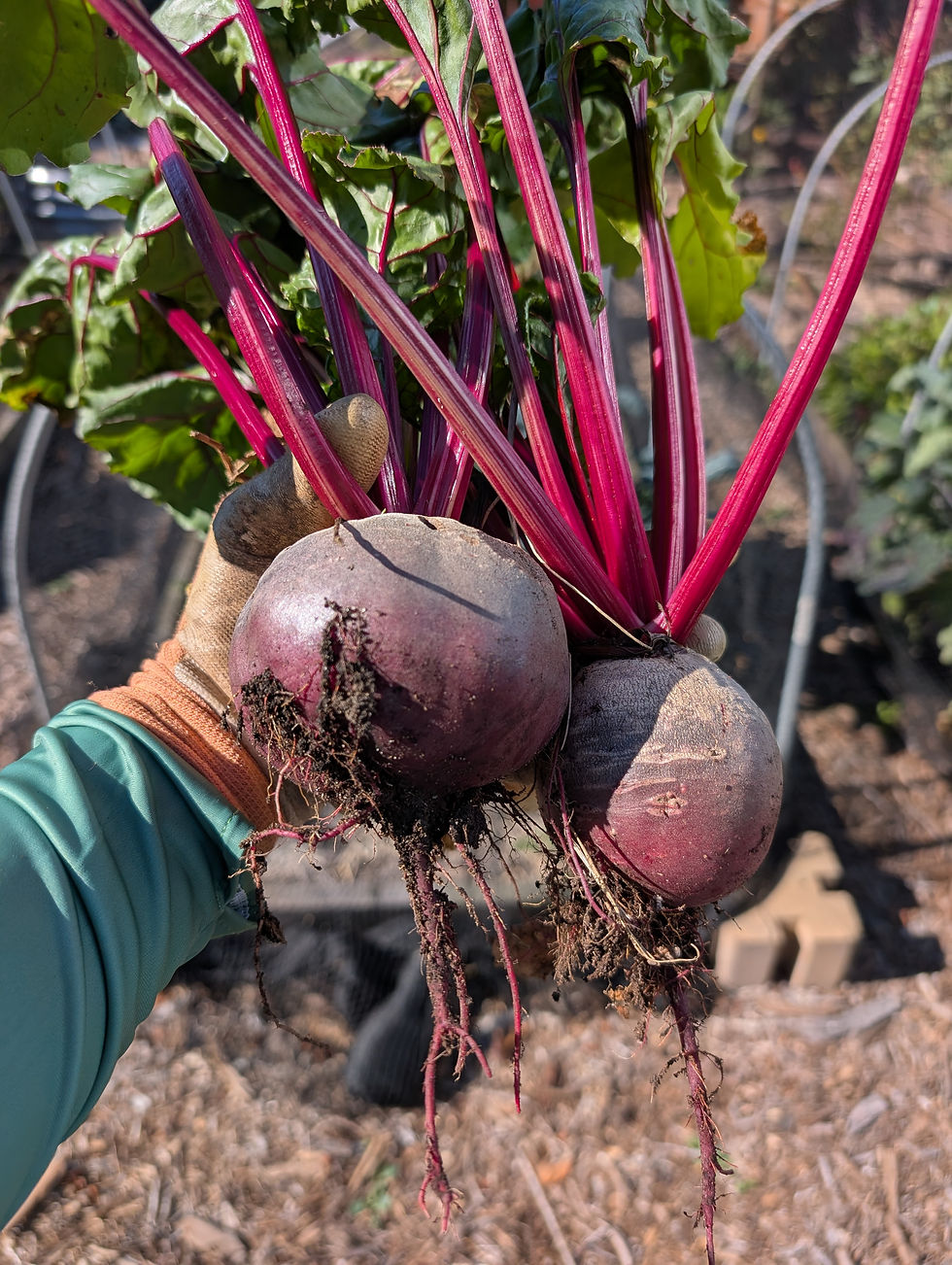
Beets come in a variety of colors. Harvest early for baby beets, and don't forget the greens are edible too.
Root crops want loose, rock-free soil and full sun, and they're happy sown directly into the ground rather than transplanted. Most are ready in 30 to 60 days, which makes them a good crop for keeping kids interested.
Potatoes
Potatoes are a staple, high-calorie crop that can be grown year round in the Bay Area, which makes them a reliable choice for an urban food garden.
They're well suited to grow bags or large containers, which makes harvest as simple as dumping out the bag. Give them full sun and keep hilling soil or compost over the stems as they grow, since that's what encourages more potatoes to form. They're ready to harvest when the greens die back.
Broccolini
Broccolini is a cut-and-come-again crop, and the whole plant is edible: stalks, leaves, and flowers. Pollinators love the flowers too, so leaving a few to bloom benefits the rest of your garden.
It grows well in a large container or a garden bed with full sun, and it's typically planted from starts in fall or early spring for a cool-season harvest.
Greens
Perennial kale and collards are a smart backbone for an edible garden. Read my guide on the best perennial vegetables for Bay Area edible gardens →
Lettuce gives you the freshest salad you can get. Harvest just the outer leaves and the plant will keep producing.
Perennial kale and collards tolerate part shade, which makes them a good fit for foggier yards. Lettuce prefers cooler weather and can bolt in a hot, sunny spot, so afternoon shade helps it last longer into the season.
Herbs

Rosemary, thyme, and sage are all perennial, do well in pots, and produce flowers pollinators love. When you buy clamshells of herbs from the supermarket or bundles from the farmers market, it's easy to end up using only part of it before the rest goes bad in the fridge. Growing these perennials means you can snip just the few sprigs you need, whenever you need them.
Bay trees can also be kept small in a larger pot, or grown as a low hedge. Once you have one, you'll never need to buy a jar of a few dried leaves again.
These Mediterranean herbs want full sun and soil that drains well, and they're some of the most forgiving plants for anyone new to gardening. A sunny front step is often enough space to grow all three.
Fruit Trees
It seems like nearly every Bay Area home has a lemon tree. Our climate also suits rarer citrus varieties that are harder to find at markets, like yuzu or bitter orange. Makrut limes are grown for their leaves rather than their fruit, and they're an essential ingredient in Thai curry pastes. All citrus does well in large pots.
Figs are a Mediterranean fruit tree that grows vigorously in the Bay Area. The fruit costs a premium in stores, but you can grow a glut of it right in your own backyard.
Berries
Small baskets of berries cost a premium at the market, since their delicate flesh makes them hard to harvest, package, and transport. If you have the space and patience for the plants to mature, a home berry patch can be very rewarding.
Raspberries send out runners and can be difficult to contain, so plan for that before you plant. Blackberries do best with a custom trellis built for trailing vines, rather than a standard stake. Both need some pruning know-how, since knowing when and how to thin canes matters for a healthy harvest year after year.
Starts vs. Seed
Ordering seed is the only way to get your hands on rarer varieties you won't find at the market. Starting seed indoors under lights also gives you a head start on the season. Not everyone has the space for trays and grow lights or the time for hardening them off before transplanting, though, and that's fine.
If that's you, look for crops that do well direct-sown right into the garden bed. Beans, peas, radishes, beets, and daikon all germinate well straight in the soil, so you can skip the indoor setup entirely and still get a full harvest.
And there's no shame in buying starts from a local nursery. A six-pack of broccolini or lettuce starts gets you a few weeks ahead, and it's often the easiest way to try a new crop before committing to a whole packet of seed.
Crop Planning and Succession Planting for a Bay Area Garden
Good crop planning is what turns a handful of plants into a garden that actually feeds you year round. It means mapping out what you'll grow, when, and in what order, so your beds are never sitting empty and never overwhelmed all at once.
A small garden stays productive when you plant in waves instead of all at once. Quick crops like radishes and lettuce can go in every two to three weeks, so you're never stuck with a single glut followed by an empty bed. As one planting matures and gets harvested, the next is already coming up behind it. This is especially useful in a mild climate like the Bay Area, where you can often keep something growing in every season rather than treating spring as the only time to plant.
Succession planting also lets you match your garden to what you actually eat. If your family goes through a head of lettuce a week, plant a new round every week or two instead of a whole bed at once. The same logic applies to roots like radishes and beets: smaller, staggered plantings keep them coming in at a size worth harvesting, rather than all bolting or all going to seed together.
Keeping It Productive: Edible Garden Maintenance
Crop planning gets a garden started, but ongoing maintenance is what keeps it producing. Regular weeding, checking your irrigation, feeding the soil between plantings, and staying on top of pests all matter more in a small edible garden, where one neglected bed affects everything around it. Even a well-designed garden needs this kind of consistent care to keep performing season after season.
Start small, grow what you love
You don't need a big yard or a farm's worth of space to get something real out of growing your own food. A few pots of herbs, a trellis of peas, or a bed of greens you can cut and come back to are enough to start feeling that connection to your food and to your place. Pick one or two crops from this list that fit how your family actually eats, and build from there.
If you'd like help with Bay Area edible garden design, crop planning, or ongoing maintenance, get in touch and let's talk about what would grow well in your yard.
Frequently asked questions
Do I need a big yard to grow my own food in San Francisco? No. Many of the crops above, including herbs, greens, and root vegetables, grow well in containers on a patio, deck, or even a sunny front step.
What vegetables grow best in San Francisco's fog belt? Cool-season crops like lettuce, kale, collards, and root vegetables tend to do well in foggier neighborhoods. Heat-loving crops like beans do better in the city's sunnier pockets.
How much sun do vegetables need to grow in a city garden? Most vegetables want at least six hours of direct sun. Leafy greens and some root crops can manage with less, which makes them a good choice for shadier yards.


