San Francisco Summer Vegetables: What Actually Grows Here

Updated: Jul 25
If you've tried growing tomatoes or peppers in the city and ended up with a lot of green fruit at the end of the season, you're not alone. San Francisco summers are notoriously cold. Temperature inversions pull coastal fog inland, strong afternoon winds keep things cool, and the heat that ripens most summer crops never really arrives.
That doesn't mean you can't grow a productive garden. There are summer vegetables that thrive in San Francisco, some familiar and some surprising. And our mild climate actually extends the season for crops other cities lose by June.
Summer crops are only part of the picture. If you're wondering what crops earn the space when the Bay Area is spoiled by incredible farmer's markets year-round, see my post on what's worth growing in a Bay Area edible garden →
Here's what actually works in San Francisco summers:
The Warm-Season San Francisco Summer Vegetables That Actually Work

Cherry Tomatoes
Skip the beefsteaks. Cherry tomatoes ripen faster and handle cool summers far better than large-fruited varieties. Sungolds are my personal favorite. They're sweet, vibrant, and reliable. On a good year I harvest enough to make tomato confit and put it up for winter.
Look for varieties labeled early-maturing or cool-tolerant, and give plants your sunniest, most wind-protected spot.
Pepino Dulce
Pepino dulce is the only melon that reliably produces fruit in San Francisco. It's native to the Andean region of South America which is mild, cool, and foggy similar to our climate. The flavor is mild and sweet, somewhere between melon and cucumber. It works well in a mild, fruity salsa. It's also perennial, so a well-placed plant keeps producing year after year.
Rocoto and Manzana Peppers
Standard hot peppers — jalapeños, habaneros, most chiles — won't ripen here. Rocoto and manzana peppers are the exception. Like pepino dulce, they're Andean natives adapted to cool mountain climates. Both are quite spicy, similar to habaneros, and both are perennial in the Bay Area.
Summer and Winter Squash
Squash is one of the most reliable San Francisco summer vegetables. Both summer and winter types do well here. I like Magda zucchini and yellow patty pan for summer squash, and Red Kuri for winter. Avoid giant pumpkin varieties because they need a long, hot season to fully develop.
One caveat: squash is prone to powdery mildew, and foggy conditions make that worse. Give plants plenty of space, and thin leaves periodically to improve airflow. Powdery mildew looks alarming but it's mostly cosmetic. The plant will keep producing.
The Advantage of a Cool Summer: Extended Spring and Fall Crops
Most gardens lose their cool-season crops to heat by early summer. In San Francisco, that doesn't happen. Lettuce, greens, and root vegetables keep producing well into summer and can be replanted for a strong fall harvest.
Lettuce
Direct sow or transplant throughout the summer. Succession planting every few weeks keeps a steady harvest going.
Bok Choy
A good choice for small urban gardens. It grows quickly, takes up minimal space, and produces reliably in cool weather.
Napa Cabbage
Cabbage can take up significant space and time, but baby varieties are manageable in smaller gardens. To check for harvest readiness, squeeze the head. It should feel firm.
Kale and Collards
Both are workhorses in San Francisco gardens. Some kale varieties can be perennialized, and there are several perennial collard varieties that do well across the Bay Area. Collards are especially satisfying alongside the warm-season crops listed above.
Carrots and Beets
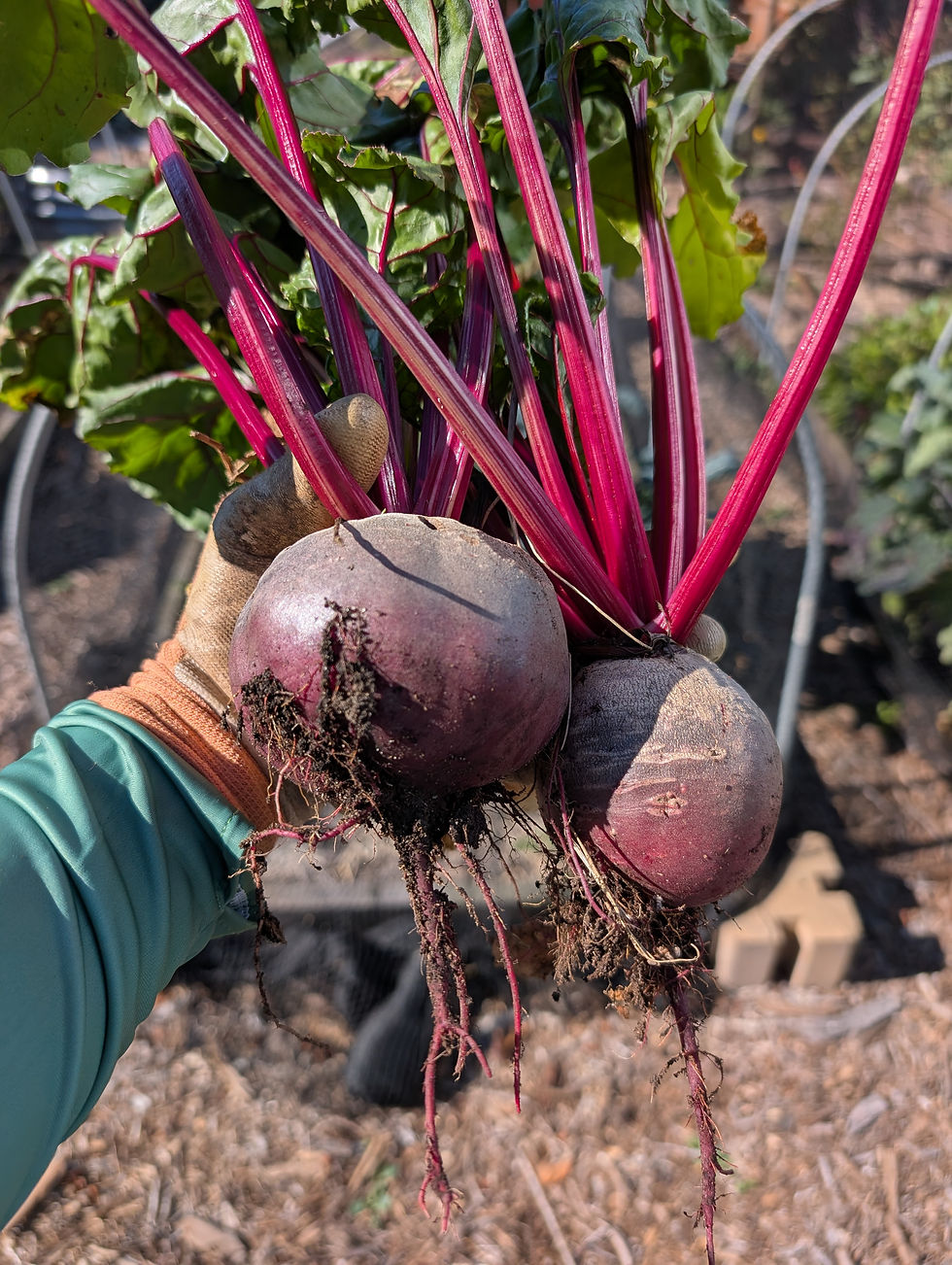
Root vegetables love cooler soil. Both carrots and beets do well throughout San Francisco summer and into fall.
Building a Garden That Works With Your Climate
Understanding what grows here is the first step. Getting the planting timing, soil prep, and site selection right is what turns a promising plant list into an actual harvest.

If you're ready to start vegetable beds, add fruit trees, or redesign an existing garden space to be more productive, Fyrn Landscapes offers edible garden design and installation across San Francisco and San Mateo County. Get in touch to talk through what's possible for your space.


