Fruit Tree Pruning in the Bay Area: When to Prune and Why It Matters

Updated: May 6
Fruit tree pruning is one of my favorite things to do in the garden. It's creative and technical at the same time, and it pays off in the most satisfying way — with food! I love preserving bountiful harvests by making jams and infusions. Getting the timing and approach right makes a real difference: a healthier tree, better fruit, and a garden that's genuinely easier to manage.
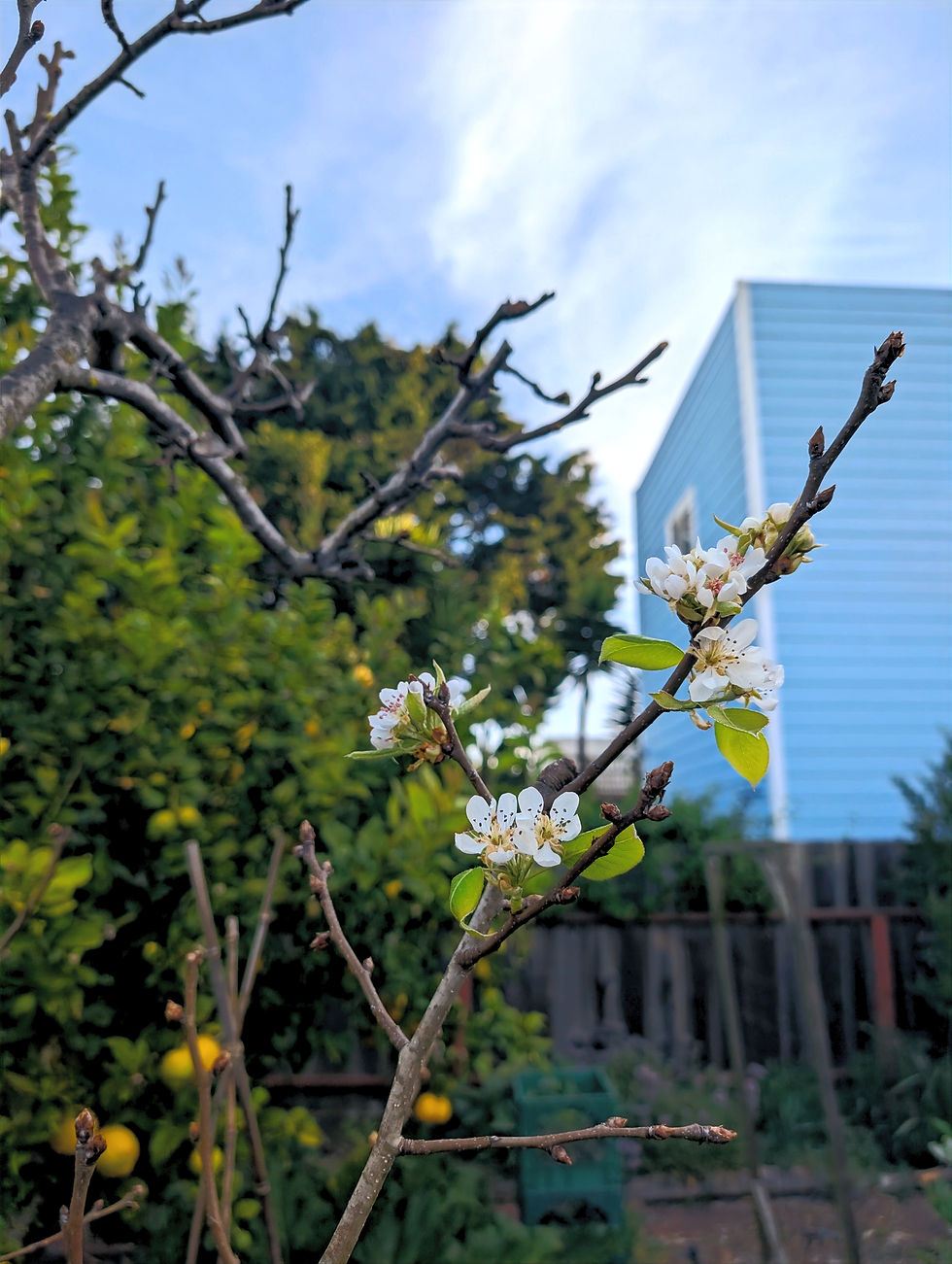
This guide covers the main pruning windows for Bay Area edible gardens: deciduous fruit trees in winter, citrus in early spring, fruit thinning, summer shaping, and the special case of apricots.
Winter Pruning for Deciduous Fruit Trees
The best time to do structural pruning on deciduous fruit trees (apples, pears, persimmons, plums, and most other stone fruits) is during winter dormancy, after leaves have dropped and before new growth begins. In the Bay Area, that window typically runs from December through February.
Dormant trees are easier to read. With no leaves in the way, the branch structure is fully visible. You can see what's crossing, what's congested, and where the tree wants to go.
What to look for
Start by removing the 3 D's: anything dead, diseased, or damaged. Then address crossing branches. Two limbs rubbing against each other create wounds that invite pests and disease. From there, think about the overall structure: Is there a clear scaffold? Is light able to reach the interior of the canopy?

A winter prune can be a harder prune. Deciduous fruit trees respond well to significant cuts during dormancy. The tree channels its energy into fewer, stronger points when it breaks dormancy in spring, which promotes vigorous new growth and better fruit production the following season.
Pruning as a design decision
There's a practical side to fruit tree pruning and an aesthetic one. Structure, health, and productivity are the technical goals. But a well-pruned tree is also beautiful, a sculptural presence in the garden through every season. Bay Area fruit tree pruning at its best is both technical and aesthetic
.
If you're working with mature trees and aren't sure where to start, a seasonal pruning consultation can help establish a baseline and a plan for ongoing care.
Citrus: Prune in Spring
Citrus trees are evergreen and operate on a different schedule than their deciduous counterparts. In the Bay Area, spring, after the risk of frost has passed and before the main flush of new growth, is the right time to prune.
Citrus pruning is generally lighter than a dormant deciduous prune, but they can take a harder prune every few years to renovate the shape. A good rule of thumb for all pruning is to take off no more than one third of the plant.
The main goals for citrus pruning are:
Thinning for airflow. A dense citrus canopy traps humidity and creates ideal conditions for aphids, scale, and sooty mold. Opening up the interior reduces pest pressure without heavy intervention.
Height control. Citrus can get tall quickly. Keeping trees at a manageable height makes harvest easier and keeps the garden in proportion.
Sucker removal. Many citrus trees are grafted, and suckers that emerge from below the graft point should be removed promptly. The rootstock is selected for vigorous growth, not delicious fruit, so branches below the graft point won't be productive. They also draw energy from the tree and, if left to grow, will eventually outcompete the grafted variety.
Fruit Thinning: Less Fruit, More Yield

This is the part that feels wrong until you see it work. Fruit tree blossoms come in clusters, and each flower has the potential to become a fruit. Left on their own, trees will set far more fruit than they can ripen well. When fruits crowd each other, they compete for resources and never reach full size.
The fix is thinning. When young fruits are still small, about the size of a golf ball, go through the tree and remove enough so that each remaining fruit has four to six inches of space around it. It feels counterintuitive to pull fruit off a tree that's working hard to produce it, but by giving each fruit room to develop, you end up with a larger overall yield and better quality fruit at harvest.
Thinning also reduces the weight load on branches, which protects the tree's structure over time. Too much fruit developing on a branch can cause the branch to break. Fruit thinning is a small task with a big return.
Summer Pruning: A Lighter Touch
Summer pruning often surprises people. Most gardeners associate cutting with dormancy. But there's real value in a lighter summer prune, and it works differently than a winter cut.
Here's the key distinction: heavy pruning in winter stimulates vigorous vegetative growth. All those cuts trigger the tree to push energy into new shoots. By summer, that new growth is dense and leafy and not productive. A summer prune tips back and thins this new growth rather than removing large structural limbs.
Summer pruning is about refinement. The goals are:
Improve airflow through the canopy to reduce late-season pest pressure
Make fruit easier to access at harvest
Control height and shape without triggering a new flush of vegetative growth
For most Bay Area edible gardens, a light summer pass in June or July does the job. It's also a good time to assess the tree overall. Do you notice any pest pressure that needs attention? What worked from the winter prune? Are there any new shoots you want to leave and train into a new scaffold?
The Exception: Apricots

Apricots are deciduous stone fruits, but they don't follow the same pruning schedule as apples, pears, and plums. This is one of the most common pruning mistakes in Bay Area edible gardens.
Prune apricots in late summer, after harvest — not in winter. The reason is disease susceptibility. Apricots are highly vulnerable to fungal infections, and open pruning wounds during the rainy season are an entry point. Winter pruning in our climate puts apricot trees at real risk.
Wait until the fruit is off the tree and summer conditions have dried things out. That's the window. The tree is still actively growing, which supports faster wound closure, and you avoid the wet-season disease risk entirely.
Putting It Together
Bay Area fruit tree pruning isn't one-size-fits-all. The timing, intensity, and goals shift depending on the species, its age, the season, and what the tree needs. Getting it right makes a meaningful difference in tree health, fruit production, and the long-term look of your garden.
If your edible garden needs a reset or you're not sure what your trees need this season, I offer seasonal pruning services in San Francisco and San Mateo County, as well as garden care and maintenance for ongoing support.
Want Fruit Trees in Your Garden?
Pruning is only part of the picture. Choosing the right varieties, placing them well, and designing around them from the start is what makes an edible garden really sing. I offer edible garden design across the Bay Area. Edible garden design includes fruit tree selection, layout, and integration with vegetables, herbs, and perennials. If you've been thinking about adding fruit trees, that's a great place to start.
If your fruit trees need attention this season, or you're ready to add them to your garden, I'd love to help. Send me a note and we'll go from there.
