Best California Native Plants for a Butterfly Garden

Updated: Sep 3
Butterflies don't just visit any garden. To truly support them, you need the right plants. Specifically, you need host plants.
What Is a Host Plant?
A host plant is where butterflies lay their eggs. Unlike nectar plants, which any butterfly might visit to feed, host plants are highly specific. Each butterfly species has coevolved with particular plants over thousands of years. The caterpillars can only eat those plants. If the plants disappear, the butterflies follow.
That's not a hypothetical. Habitat loss across California has already pushed several species toward the edge. When we replace native plant communities with lawns, ornamental beds, and non-native ground covers, we remove the ecological scaffolding that native butterflies depend on. Planting a California native plants butterfly garden is one of the most direct ways to support or native butterflies.
The Best California Native Plants for a Butterfly Garden
The plants below serve double duty: they're host plants for multiple native butterfly species, and they're genuinely beautiful in the garden. You don't have to compromise your garden's appearance to support wildlife.

Coast Buckwheat (Eriogonum latifolium)
Coast buckwheat is a workhorse of the California native palette. Its flat-topped flower clusters age from cream to rust over the season, giving months of visual interest and extended forage. In the garden, it works beautifully as a low sprawling shrub along edges or in dry, sunny slopes.
Host plant for:
Acmon Blue (Icaricia acmon) — one of the most common blues in coastal California
Grey Hairstreak (Strymon melinus)
Green Hairstreak (Callophrys viridis)

A note for San Francisco gardeners: The San Francisco Green Hairstreak (Callophrys viridis) is a resident butterfly found in specific SF neighborhoods, including Twin Peaks, Glen Canyon, and Bernal Heights. It's considered a species of local conservation concern. Coast buckwheat is one of its primary host plants. Broadleaf stonecrop (Sedum spathulifolium), a low-growing native succulent, is another. If you live near any of SF's open space corridors, planting these two together creates meaningful habitat for a butterfly that exists almost nowhere else.
Ceanothus (Ceanothus spp.)
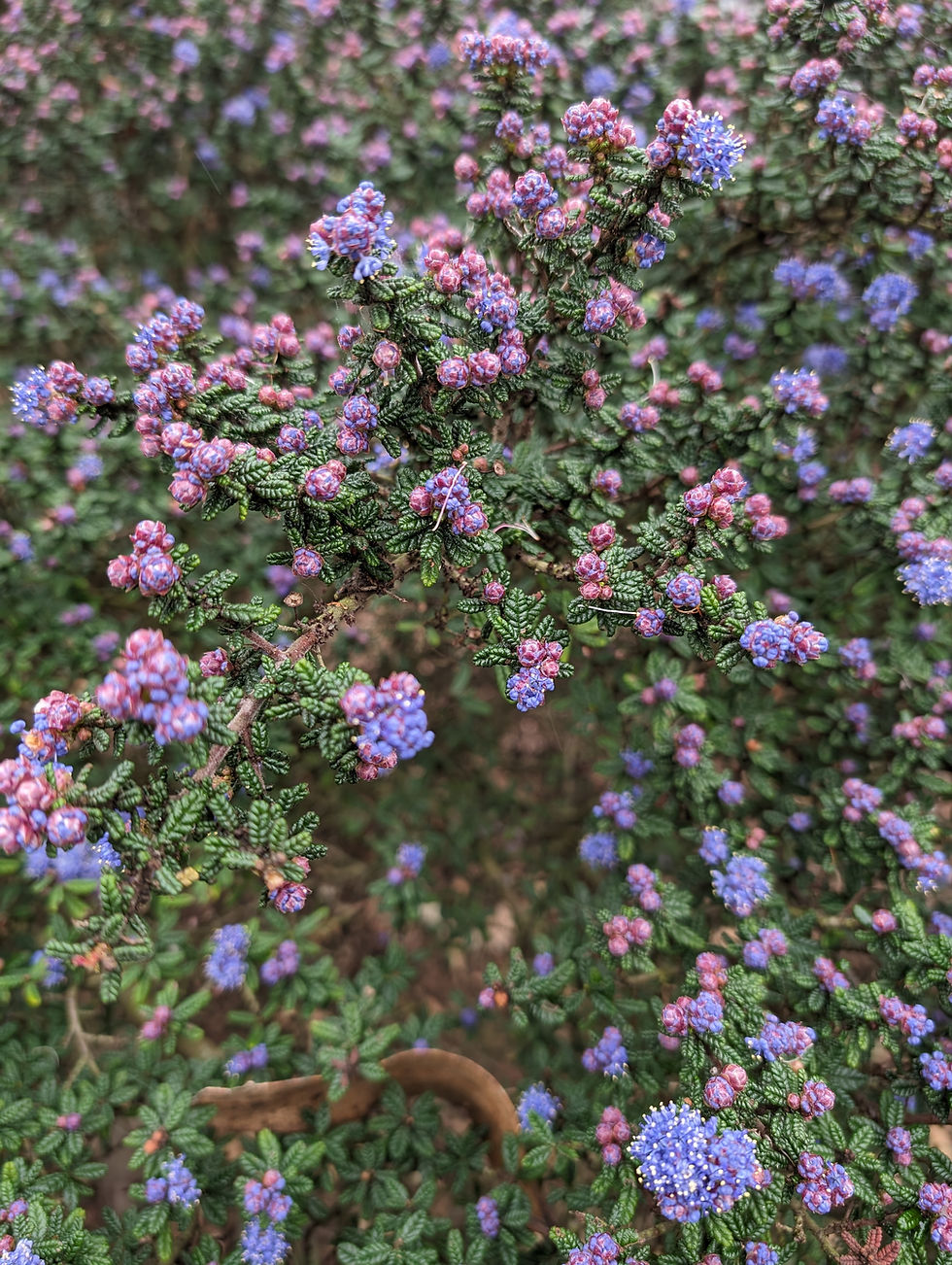
Few plants make as dramatic a statement in a Bay Area garden as ceanothus in full bloom. The electric blue-violet flower clusters appear late winter into spring, drawing every pollinator in the neighborhood. There's a ceanothus for nearly every garden condition, from low, spreading groundcovers to large shrubs.
Host plant for:
Brown Elfin (Callophrys augustinus)
California Tortoiseshell (Nymphalis californica)
Echo Azure (Celastrina echo)
For design help selecting the right ceanothus species for your site conditions, get in touch.
Sticky Monkey Flower (Diplacus aurantiacus)

Sticky monkey flower is a reliable performer in dry, sunny gardens. The tubular orange or yellow flowers bloom over a long season and are irresistible to hummingbirds and bees as well as butterflies. It naturalizes beautifully along sunny slopes and is one of the better plants for bridging formal and wild aesthetics.
Host plant for:
Common Buckeye (Junonia coenia)
Variable Checkerspot (Euphydryas chalcedona)
Silver Lupine (Lupinus albifrons)

Silver lupine brings structure, silvery-grey foliage, and tall violet flower spikes to the garden. It's striking in dry, rocky, or well-drained spots and has significant conservation value for two threatened species found right here in the Bay Area.
Host plant for:
Mission Blue (Icaricia icarioides missionensis) — a federally endangered butterfly found only in the SF Bay Area
Boisduval's Blue (Icaricia icarioides)
Designing with silver lupine in San Francisco or the Peninsula means potentially providing direct habitat for one of the rarest butterflies in the country.
Coffeeberry (Frangula californica)
Coffeeberry is a versatile, underused native shrub. It tolerates shade, part shade, and sun, and the berries shift from red to black as they ripen, adding seasonal color alongside the foliage. The berries are a great food source for songbirds as well. In a mixed shrub border, it provides structure and year-round interest while supporting local wildlife.
Host plant for:
Pale Swallowtail (Papilio eurymedon)
Grey Hairstreak (Strymon melinus)
Edible Plants That Double as Host Plants
If you grow edibles, you may already have host plants without knowing it. A few kitchen garden staples are valuable additions to a California native plants butterfly garden or any pollinator-friendly garden.
Stinging Nettle (Urtica dioica) hosts the Red Admiral (Vanessa atalanta). Nettles get a bad reputation, but in a contained spot or naturalized corner, they earn their place many times over. Nettles do best in a shady, wet corner. You have to wear gloves when you harvest to avoid getting stung, but cooking the leaves removes the sting. Nettles are high in nutrients and make a great pesto.
Dill is a host plant for several swallowtail species, including the Anise Swallowtail (Papilio zelicaon). Let some dill go to flower and seed in your vegetable garden. The caterpillars are easy to spot and worth watching.
I design edible gardens throughout the Bay Area and can integrate pollinator support into kitchen gardens, raised beds, and mixed plantings.
Native Grasses for Butterflies
California's native grasslands are nearly gone. Less than one percent of the state's historic grassland remains intact. That loss has consequences for the butterfly species that evolved alongside native grasses.

Native grasses also happen to be some of the most beautiful plants you can grow. The movement, seed heads, and fall color they bring to a garden are unmatched. Here are three worth growing:
Purple Needlegrass (Stipa pulchra), the official state grass of California, is a host plant for the Common Ringlet (Coenonympha tullia). It forms graceful clumps and moves beautifully in the wind.
Tufted Hairgrass (Deschampsia cespitosa) is an excellent bunch grass for moist or part-shade areas. It hosts the Umber Skipper (Poanes melane) and provides fine texture in shade gardens where most grasses struggle.
Blue Wildrye (Elymus glaucus) is a spreading grass that naturalizes well under oaks and in dappled shade. It hosts the Woodland Skipper (Ochlodes sylvanoides) and fills space gracefully without overwhelming neighboring plants.
Don't Forget Nectar Plants
Host plants get your butterflies through the larval stage. Nectar plants keep adults fueled and on-site throughout the season. For a California native plants butterfly garden to function well, you need both.
Coyote Bush (Baccharis pilularis) is one of the most important late-season nectar sources in California. It blooms in fall when almost nothing else does and is essential for migrating monarchs and many resident species. It's also one of the best low-maintenance shrubs for sunny, dry gardens.

Yarrow (Achillea millefolium) blooms in late spring through summer and is a broad-spectrum pollinator plant. Butterflies, bees, beneficial insects, and predatory wasps all use it. The flat flower heads make ideal landing platforms for smaller butterfly species. It's also a great addition to a cut flower garden.
Together, these two plants can extend your garden's butterfly season from late spring into November.
A Word on Milkweed
Milkweed (Asclepias spp.) comes up in almost every conversation about butterfly gardening because it's the sole host plant for monarch caterpillars. But in the coastal Bay Area, you may be surprised to hear that planting milkweed is actually discouraged.

California's monarch population overwinters at coastal sites — Pacific Grove, Natural Bridges in Santa Cruz, and groves along the Central Coast. In fall, monarchs are supposed to migrate to those sites, cluster, and wait out the cold months. Planting milkweed in the coastal Bay Area can interrupt the migration signal entirely, causing monarchs to skip their overwintering sites and attempt to breed through winter instead.
The best thing coastal Bay Area gardeners can do for monarchs is skip the milkweed and plant late-season nectar sources instead. Coyote bush is especially helpful for monarchs to fuel up on nectar during migration. A garden full of coyote bush in October and November actively supports their journey to overwintering sites rather than disrupting it.
Beautiful Habitat Gardens
A well-designed California native plants butterfly garden doesn't look like a conservation project. It looks like a beautiful garden with movement, structure, seasonal interest, and genuine ecological depth.

There are many more California native plants that support butterflies, other pollinators, and birds. What works best depends on your site conditions, sun exposure, soil, and what you want the space to feel like.
If you're in San Francisco, the Peninsula, East Bay, or Marin and want help designing a garden that supports local wildlife without sacrificing beauty, I'd love to talk. I design native plant gardens across the Bay Area and bring hands-on horticultural knowledge to every project.

Rachael Fyrn is the founder and horticulturist at Fyrn Landscapes. She trained at Green Gulch Farm, worked as a restoration technician in the San Francisco Bay Delta, and as a horticulturist at Filoli Historic Garden. She holds certifications in California native plant landscaping (CNPS) and permaculture design, and designs gardens throughout the San Francisco Bay Area.


