How to Design a Drought Tolerant Garden in San Francisco

Updated: May 6
Water restrictions are more common in the Bay Area every year. Droughts are longer, utility bills go up. A well-designed garden can be beautiful, ecologically sound, and genuinely low-water. Water-wise gardening takes more than just swapping in a few succulents.
Here's what goes into designing a drought tolerant garden in San Francisco that actually works.
Start With the Right Plants in the Right Place
Plant selection is the foundation of any drought tolerant garden. If you choose plants that require frequent irrigation, no amount of smart design will offset that need. As temperatures rise and water restrictions tighten, the wrong plant palette becomes a liability.

The best starting point is California native plants. An important caveat: California is a large, ecologically diverse state. A plant native to the Central Valley performs very differently than one native to the SF Bay Area coast. Select plants adapted to your specific microclimate so they can work with the natural seasonal rhythms rather than against them.
California has a Mediterranean climate which is characterized by dry summers and wet winters. Most plants from other global climates expect summer rain and will require supplemental irrigation here. California natives are different. Many of them actually prefer dry summers and will suffer if kept wet through the warm season.
This is why hydrozoning matters. Grouping plants with similar water needs on the same irrigation zone simplifies your entire system. If you mix high-water and low-water plants in one zone, you'll end up overwatering some and underwatering others. A thoughtful planting plan prevents that problem from the start.
Planting design is one of my favorite parts of this work. Learn more about my landscape design services →
Build the Soil

Healthy soil is just as important as the right plants. There's an old horticultural saying: "Don't put a $20 plant in a $5 hole." Invest in your soil and your plants will reward you.
Compost improves soil structure and moisture retention. It acts like a sponge, helping plant roots stay hydrated longer between irrigation cycles. Adding compost reduces how often you need to water.
Mulch works at the surface. A 2–3 inch layer of woodchips, straw, or rice hulls protects soil from direct sun, slows evaporation, and gradually breaks down to add organic matter. Over time, mulched beds become more moisture-retentive and easier to maintain.
Slow It, Sink It, Store It
Permaculture design offers a practical framework for managing water: slow it, sink it, store it.
Slow it. Grading, terracing, and swales all reduce the speed of water moving across your site. Slower water has more time to infiltrate rather than run off.

Sink it. Runoff is wasted water. When water infiltrates into the soil instead of draining to the street, it recharges groundwater and becomes available to plant roots. Rain gardens, planted channels, and exposed soil in low-lying areas all help capture precipitation on-site. If your roof downspout drains onto paving, redirecting it into a planted bed is one of the easiest improvements you can make.
Store it. Rain catchment lets you bank winter water for dry months. The basic formula: Roof Area (sq ft) × Rainfall (inches) × 0.623 = Gallons Collected. A small 100 sq ft shed roof can yield over 1,000 gallons per year in San Francisco. That water can feed an irrigation system or be used to mix liquid fertilizers and compost teas — for free.
Manage Irrigation Thoughtfully
You may be surprised to hear that most gardens are actually overwatered. A standard set-it-and-forget-it schedule wastes water and can harm drought-adapted plants.

Getting irrigation right requires real calculation. As a QWEL-certified professional, I use a formula that accounts for your site's evapotranspiration rate, the water needs of your specific plants, and your irrigation system's output. It's technical work, and it produces meaningfully better results than guessing.
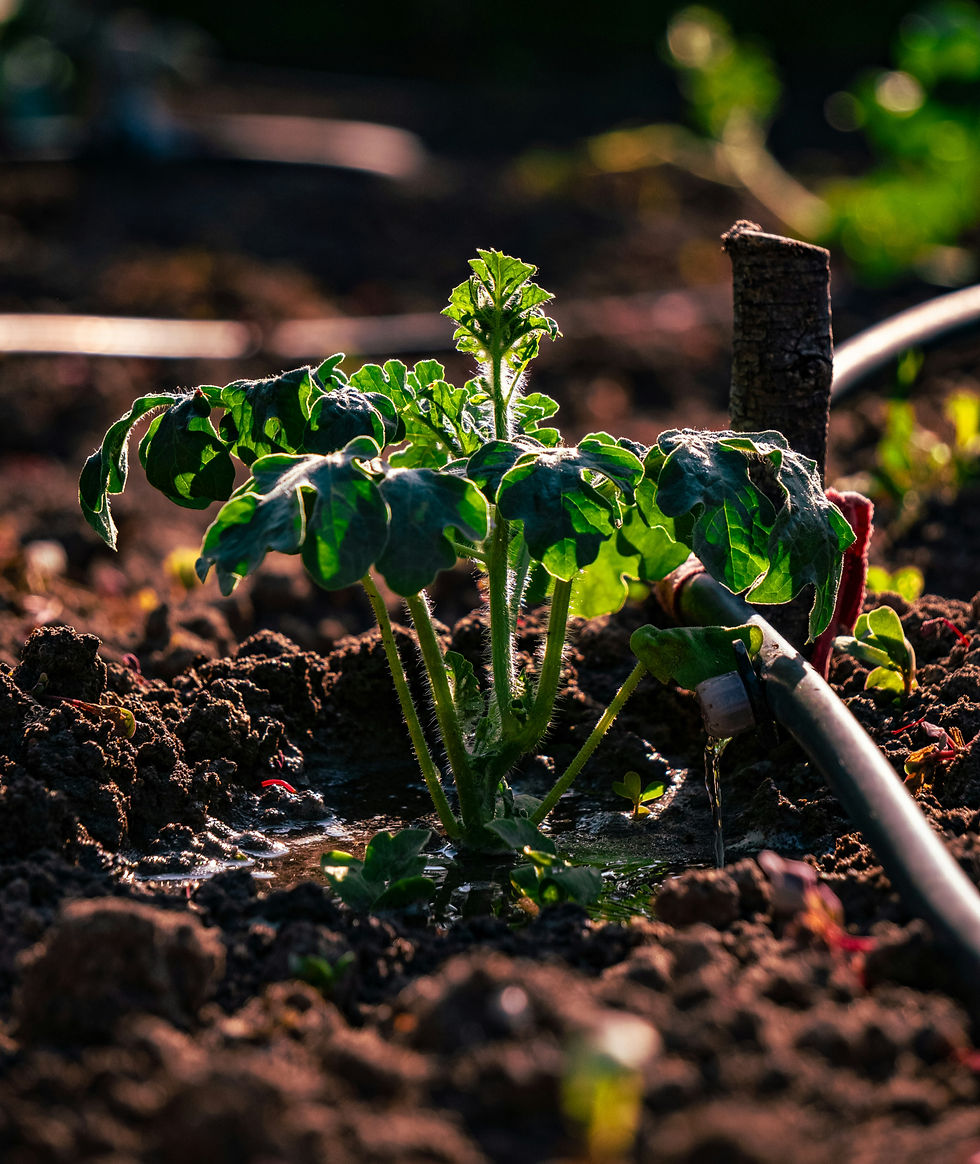
Drip irrigation is the most efficient delivery method for most gardens. It applies water slowly and directly at the root zone, minimizing evaporation and runoff. Spray systems lose a significant amount of water to the air before it ever reaches the soil.
Weather sensors can further improve efficiency by adjusting your schedule based on real-time humidity, wind, solar, and rainfall data. That said, they're not foolproof. In San Francisco, fog-driven humidity can cause a sensor to cut irrigation more than the garden actually needs. An experienced maintenance gardener who checks soil conditions and plant health regularly makes better decisions than an automated system alone.
Annual irrigation audits are essential. March is the ideal time, right as the rainy season winds down and before you turn the system back on for summer. A thorough audit checks for leaks, blockages, and inefficiencies, and resets your schedule for the season ahead.
Monthly garden maintenance includes seasonal irrigation checks and adjustments. I serve clients in San Francisco and San Mateo County.
Ready to Design a Drought Tolerant Garden in San Francisco?
A garden that needs less water over time isn't just better for the environment, it's better for your budget and easier to maintain year after year. Getting there takes the right plants, healthy soil, and a well-managed irrigation system.
If you're ready to start, I'd love to talk about your garden.